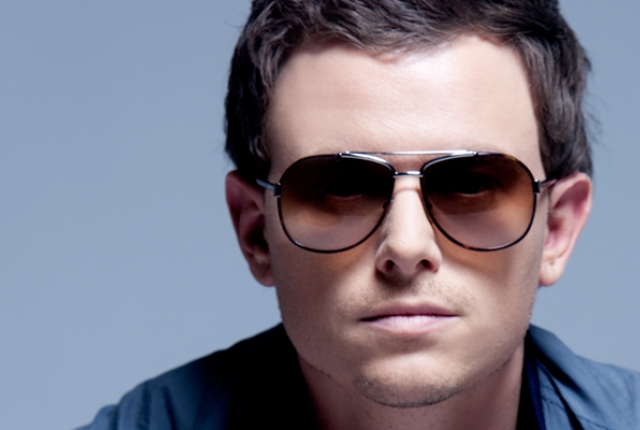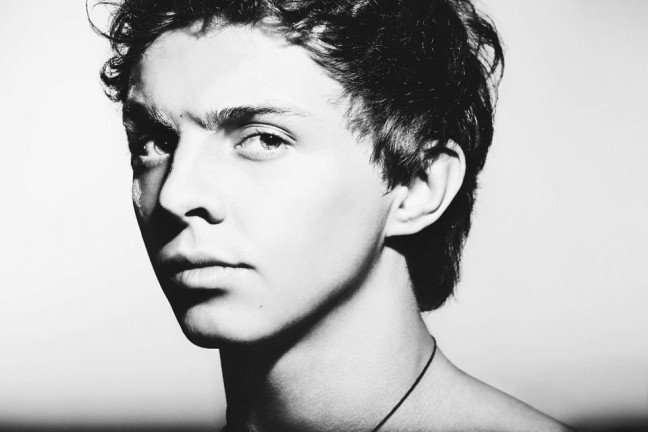


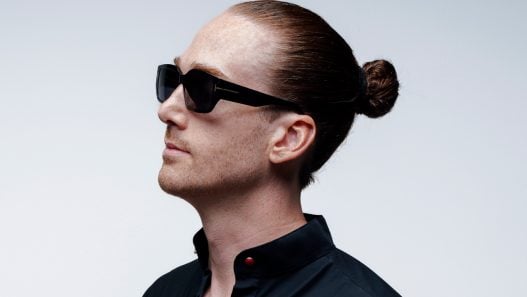





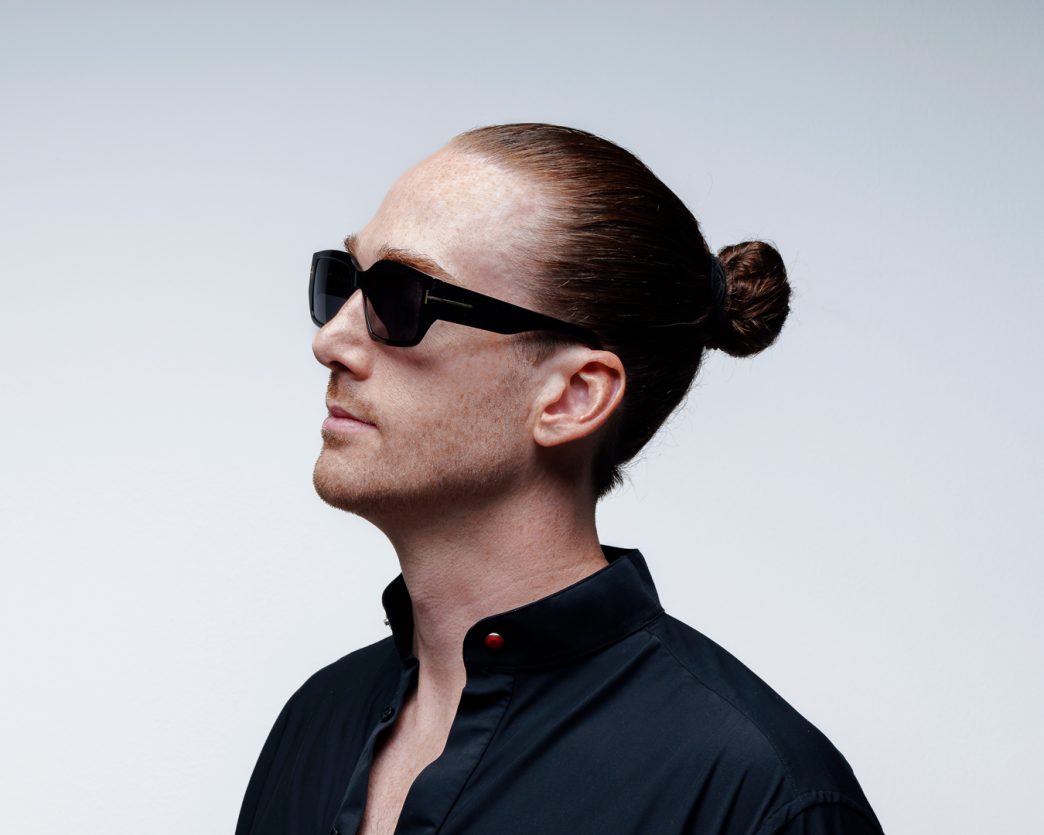
Born Alessandro Kraus in Geneva, Switzerland, and raised in Lugano, SUARK is a Swiss DJ, producer and remixer whose work moves through melodic techno, electronic music and underground dance culture. Growing up in a family deeply connected to classical music, SUARK was introduced to the piano by his grandfather, orchestra conductor Raffaele Paverani, and developed an early relationship with music, sound and emotional expression.
His musical journey has taken him from early experiments with synthesised sounds and analogue electronics to performances at major international venues and festivals. After establishing his SUARK alter ego, he began developing his presence in the underground club scene, building momentum through performances in Milan before expanding his reach internationally. Today, he works across creative hubs including London, Los Angeles and Milan.
SUARK’s production history includes releases such as “Black Rainbow,” his Impulse EP and “Danger,” alongside collaborations and remixes connected to artists including Lost Frequencies and Bastille. His work reflects an ongoing interest in combining underground textures with broader electronic influences while maintaining a strong focus on identity and emotion. 
We caught up with SUARK to discuss his musical upbringing, the emotional architecture of his sound, the story behind “Step by Step,” the balance between intimate clubs and major festival stages, and the importance of protecting creative instinct in an increasingly commercial and technologically driven industry.
Many artists today move across and blend genres rather than fitting neatly into a single category. How would you personally define or label your sound, and what genres, subgenres, or underground scenes have most influenced and shaped your evolution as an artist?
I’m more interested in songs and emotional phases than in genres themselves. Sometimes I feel inspired to create something that naturally fits within a specific genre, and other times the music takes me somewhere completely different.
Melodic house and melodic techno have definitely been the strongest influences on my sound, but what I’m always searching for first is an emotional state. I like building a moment that feels introspective, cinematic or almost suspended in time, and then letting that tension evolve into something much more energetic when the drop arrives.
For me, that contrast between emotion and release is probably the most consistent element in my music.
How did the environment you grew up in shape you as an artist, and in what ways does it still influence your creative identity today?
Music was always a big part of the environment I grew up in. My family has a strong musical background—my grandfather was an orchestra conductor, and he was actually the one who first taught me piano. Pretty much everyone in my family plays an instrument, so I honestly can’t remember a day when music wasn’t playing loudly somewhere in the house.
My father and grandfather also used to take me to classical concerts from a very young age, and I think that had a much bigger influence on me than I realised at the time. That sense of dynamics, emotion, tension and release is still very present in the way I approach music today.
Even though I work in electronic music, I’m always trying to create something that feels emotional and cinematic before it becomes energetic.
Can you share a brief, compelling narrative or inspiration behind your new release?
“Step by Step” was born in a very natural and friendly environment—three friends in Spain making music without trying to force a specific result, just wanting to create something that felt honest.
The idea came from that very particular kind of happiness you sometimes recognise in the middle of ordinary life. It can be a loud family dinner, a day on the lake with friends, a trip with someone you love, or simply a moment where everything suddenly feels exactly where it should be.
It’s not an explosive kind of happiness, but something calmer and deeper—that moment of realisation where you think, “This is the feeling I want more of in my life.”
That became the meaning behind “Step by Step.” Life is constantly moving and changing, but sometimes happiness is really about recognising those simple moments while you’re inside them, and slowly building your life around the things and people that give you that feeling.
Musically, we wanted the track to carry the same emotion: warm and reflective at first, then gradually opening into something uplifting and energetic.
Do you prefer producing music in a studio setting, or are you more comfortable creating on the road or during touring?
I’m definitely more of a studio person when it comes to actually creating. I’m a huge FOMO guy, so when I’m touring, I want to experience everything—meet people, catch up with friends, discover the city, go to other shows, and somehow make sure I’m not missing anything happening around me.
That makes it pretty difficult for me to find the mental silence I need to really get lost in making music. It’s something I’m actively working on because I spend so much time on the road, and learning how to switch into that creative headspace anywhere would definitely make me more productive.
But when I’m home, it’s almost the complete opposite. I basically live in the studio. I can disappear in there for entire days, working on ideas until ridiculously late, so I guess the two sides balance each other out.
Touring gives me the experiences, people and emotions that inspire me, and being back home is where I finally turn all of that into music.
Have you performed at any major music festivals or large-scale venues? If so, which one would you consider the most significant milestone in your career so far?
I’ve been fortunate enough to play some incredible stages throughout my career, including Tomorrowland twice on the Library Stage, Ushuaïa Ibiza, and a number of DJ Mag Top 100 clubs around the world.
But if I had to choose one defining milestone, it would definitely be my first Tomorrowland. Nothing really prepares you for that moment. Walking onto that stage, seeing the scale of the festival and realising that I was actually part of something I had looked up to for years was almost surreal.
It’s still one of the craziest experiences of my life, and one of those achievements that is completely burned into my memory. No matter where I play in the future, I think that first Tomorrowland will always have a special place for me.
Do you feel more connected to the energy of major festival stages or the raw intimacy of underground warehouse parties and DIY spaces, or do you find inspiration equally in both worlds?
I genuinely enjoy both, and I think having a balance between the two is probably the best thing for me as an artist.
Underground clubs have this raw connection that is really hard to recreate anywhere else. You’re much closer to the crowd. People are trying to high-five you during the set, someone is handing you a drink, you’re feeding off their energy and they’re feeding off yours. It becomes this constant exchange where everyone in the room is building the moment together.
The bigger stages give you something completely different. You have the scale, the production, the visuals, the wow factor—everything becomes more cinematic. In that environment, though, I feel like the energy is often more about the artist giving something huge to the crowd.
For me, the perfect career is having both. One keeps you connected to people in a very direct way, and the other lets you create those massive, unforgettable moments. I think experiencing both worlds is what keeps an artist inspired and genuinely happy.
What role does rebellion or counterculture play in your music?
For me, rebellion or counterculture isn’t necessarily about trying to break rules just for the sake of going against them. It starts much earlier in the creative process.
It’s about giving yourself the freedom to follow an idea or a feeling wherever it wants to go, without immediately thinking about genre, trends, algorithms or what the music business expects from you. The moment you start creating with too many boundaries in your head, you risk losing the most interesting part of the idea.
So, in that sense, rebellion for me is simply protecting that first instinct. You create without permission, without labels, and only later decide where the music belongs. I think that freedom is where the most genuine and creative work usually comes from.
How would you evaluate the current state of the global EDM scene in terms of its overall health and creative direction?
I’m an artist, not really a philosopher, so I don’t feel the need to judge whether the EDM scene is healthy or unhealthy, or tell people what direction music should be taking.
Of course, the business side of music is important, and every artist has to be aware of it. But at the same time, I’m not a big fan of the copy-paste culture that can happen when one sound, formula or trend becomes successful and suddenly everyone starts chasing the same thing.
For me, the most exciting moments in electronic music happen when artists understand the business, but still protect their own identity and take creative risks. That balance is probably what keeps the scene moving forward.
Do you see AI as a threat to musicians, a helpful collaborator, or something else?
I think you said it in the question—the only real option is to embrace AI. I see it as a new kind of instrument or creative tool. If it can speed up certain parts of the process, help solve technical problems or open up ideas you might not have reached otherwise, then it makes sense to use it.
At the same time, I would never want the creative process to become fully replaced by it. For me, the human part—taste, emotion, instinct and experience—is still what gives music its identity.
So my approach is simple: use AI where it adds value, but don’t let it become the artist.
What’s one piece of advice you would offer to an aspiring DJ or producer looking to break into the music scene today?
Experiment as much as possible and don’t be afraid to take time figuring out what actually feels like you. The more you try, the more you start understanding your own sound and identity.
At the same time, learn how to communicate your music. Today, being a good musician is only one part of the job. You also need to understand how to present your world, tell your story, connect with people and make them care about what you’re creating.
The music always has to come first, but if nobody understands who you are or what you’re trying to say, it becomes much harder for that music to travel.
What is the official title of your latest or upcoming single, EP, or album?
We’ll be revealing that very soon… so I’ll keep a little mystery around it for now 😉
Looking ahead, what excites you most about the next phase of your artistic journey, both creatively and personally?
What excites me most right now is that I’m working on a few projects that could lead in very different directions creatively. My management and I are currently looking at which ones make the most sense to prioritise, but I’ve already been testing a few unreleased IDs live, and the crowd reaction has been really encouraging.
I like being in that phase where nothing feels completely predetermined yet. I have ideas, I have a direction, but I’m also curious to see where the music naturally takes me.
On the live side, Asia has been giving me some incredible moments and a lot of satisfaction, so that’s definitely a region we want to keep building on. Creatively and personally, I think the next phase is really about following the strongest ideas, staying open and pushing further wherever the response feels genuine.
Are there any upcoming festivals, tours, collaborations, headline shows, or major projects listeners should keep an eye out for over the coming months?
I’ve just wrapped up a one-month tour across Asia, and I’ll be heading back there again in October and November, so there’s definitely a lot happening on the live side.
On the release front, we’re currently finalising the schedule for a few records and projects. We’re taking a little time to make sure each one lands at the right moment, but we’ll be announcing the dates very soon.
So for now, I’d say: keep an eye on both the touring and the music—there’s quite a lot coming.
Listen to SUARK on PLAYY. Music
Listen to the exclusive mix with SUARK HERE!