

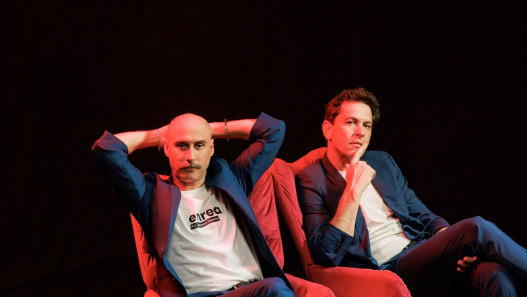

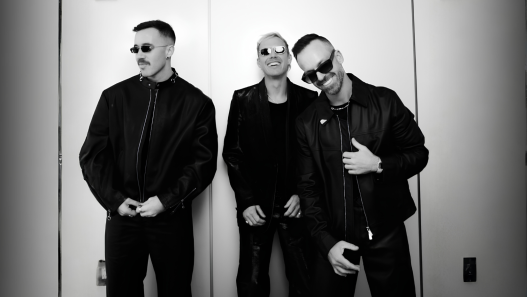

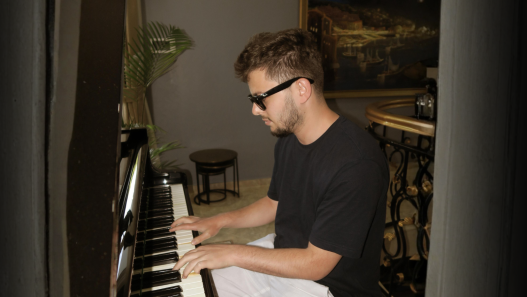




For Gameboyz, genre has never been a boundary. Moving between electro, house and indie dance, the duo have spent years developing a sound that reflects their wide-ranging influences while remaining unmistakably their own. Their musical identity is rooted in the energy of 1990s rave culture, with acts such as The Prodigy, The Chemical Brothers, Propellerheads and Fatboy Slim leaving a lasting impression on their approach to electronic music.
Rather than chasing trends or market expectations, Gameboyz have focused on developing a recognisable identity through experimentation, collaboration and a genuine enjoyment of the creative process. With new vinyl releases on the horizon, including Pequeño Criminal EP and a forthcoming single, ‘2030’, we caught up with the duo to discuss their evolving sound, creative process, relationship with the underground, AI, and what lies ahead.

Many artists today move across and blend genres rather than fitting neatly into a single category. How would you personally define or label your sound, and what genres, subgenres, or underground scenes have most influenced and shaped your evolution as an artist?
That is exactly what we do. We have never wanted to lock ourselves into one genre or sound. It is difficult for us to label our music because every track carries different influences. We mainly move between electro, house and indie dance, although a few years ago we were much closer to nu-disco and slow-motion sounds. Over time, we have gradually increased the BPM and explored new territory without losing our identity.
Rather than being defined by a genre, we prefer to be recognised by the way we make music. What we enjoy most is hearing someone say, “This sounds like Gameboyz,” regardless of the style of the track. For us, that is the best label an artist can have.
How did the environment you grew up in shape you as an artist, and in what ways does it still influence your creative identity today?
When we were teenagers and first discovered electronic music, artists and groups such as The Prodigy, The Chemical Brothers, Propellerheads and Fatboy Slim had a huge impact on us. That 1990s sound, rave culture and completely open approach to mixing genres blew our minds, and those influences are still present in our music today.
Naturally, we have evolved over the years, and our sound has changed, but we have never wanted to lose that essence. You can still hear traces of that era in many of our tracks: the energy, the breaks, the basslines, the melodies and the slightly mischievous attitude that inspired us from the beginning.
Can you share a brief, compelling narrative or inspiration behind this new release?
Inspiration can come from many different places. Sometimes we hear a track we love and think, “It would be great to create something with this kind of energy and send it to that label.” That may be the starting point, but eventually you always drift away from the original idea and begin to sound like yourself. That is one of the beautiful things about production: you can be inspired by something without trying to copy it.
Lyrics are completely different and much more unpredictable. They can come from an argument we had over the weekend, a true-crime documentary, a news story, a phrase we overheard or something that happened while we were out partying. We do not follow a specific method. We simply look for an idea with enough personality to make us want to build a story around it.
Do you prefer producing music in a studio setting, or are you more comfortable creating on the road/during touring?
Definitely in the studio. Ideas often appear while we are travelling, so we write down references, discuss concepts or record voice notes before they disappear. But when we travel to perform, we are focused on the show and on enjoying the experience.
We are not the kind of artists who take a laptop to the hotel and start producing after a gig. We already have our own studio, where we have the time, equipment and environment needed to work properly. We prefer to separate the moment of creating music from the moment of sharing it with an audience.
Have you performed at any major music festivals or large-scale venues? If so, which one would you consider the most significant milestone in your career so far?
One of our most recent highlights was performing at Jara Festival, organised by Noom Música Moderna in El Real de la Jara. It was one of those shows that stays with you. The setting was spectacular, inside a castle, with an excellent sound system and lighting that created a very special atmosphere.
Beyond the venue itself, what made it important was the connection with the crowd. The response was strong from the opening track, and we felt that the audience fully understood the journey we wanted to create. When the location, the crowd and the set all come together naturally, it is difficult to ask for more.
Do you feel more connected to the energy of major festival stages or the raw intimacy of underground warehouse parties and DIY spaces, or do you find inspiration equally in both worlds?
Every setting has its own magic. We love underground clubs and independent spaces because the connection with the audience often feels more direct and personal. At the same time, playing festivals and moving a large crowd is also an incredible experience.
The most important thing is knowing how to adapt to each environment. A club and a festival are completely different situations, so we always think about the venue, the audience and the time slot before preparing the direction of the set. We do not play exactly the same way everywhere.
What role does rebellion or counterculture play in your music? Whether through challenging commercial norms, experimenting with sound, questioning societal expectations, or simply creating from a place of pure expression, how do these ideas shape your artistic identity?*
We have never really sat down and asked ourselves whether our music is rebellious or countercultural. We simply make the music that comes naturally to us without paying too much attention to what everyone else is doing.
We do not produce according to market expectations, trends or the need to please everyone. Once you start creating with those objectives in mind, it becomes very easy to lose your identity. We prefer to remain faithful to what represents us, even when that means not everyone will connect with the result.
We believe authenticity carries more weight in the long term than trying to fit into a particular movement. Ultimately, you have to be yourself because that is the only way to build an artistic identity that can last.
How would you evaluate the current state of the global EDM scene in terms of its overall health and creative direction, and how would you position it within a broader spectrum ranging from emerging challenges to strong creative growth?
We believe the industry should pay much more attention to the underground scene. There is an enormous amount of original music being created beyond the most visible playlists and algorithms, but too often people only listen to what streaming platforms place directly in front of them.
The scene would be healthier and more creatively exciting if audiences, media and promoters dug deeper, supported independent artists and focused less on image, hype and social-media posturing.
Do you see AI as a threat to musicians, a helpful collaborator, or something else? How do you plan to keep your music relevant as the industry changes rapidly because of these tools? By embracing AI, avoiding it, or taking a different approach?
We think artificial intelligence can be both a threat and a useful tool. On one hand, it makes it easier for people with very little experience to generate content, which can create more noise and devalue certain creative skills. However, similar changes have already happened in photography, design and illustration.
At the same time, we believe that craftsmanship will always have value. Part of the renewed interest in vinyl and DJ sets using turntables may come from this need to reconnect with something physical and authentic, where there is visible technique, knowledge and human intention behind the result.
At the moment, we do not use AI in our production process, but we are not completely against using it in the future. Should a tool appear that helps us speed up technical processes or expand our creativity without compromising our identity, we would consider it another instrument. What we do not want is for technology to replace the personal and creative side of making music, because that is where the real difference still exists.
What’s one piece of advice you would offer to an aspiring DJ or producer looking to break into the music scene today?
Do not try to become a copy of somebody else. It is completely normal to be inspired by artists you admire; everyone starts that way. But eventually, you need to discover your own voice.
Having a recognisable identity is far more important than following the current trend. Some people will connect with your sound and others will not, but when you remain consistent, people will eventually recognise you for it.
Patience is also essential. Today, everything seems expected to happen immediately, but building a career takes time. You need to work hard, keep learning and continue believing in what you do even when the results do not arrive as quickly as expected.
Most importantly, work without constantly expecting something in return. That is one of the keys for us. When you make music only to get bookings, numbers or recognition, frustration arrives very quickly. When you work because you genuinely enjoy the process and believe in the music, opportunities eventually appear. Perhaps not exactly when you want them, but they do arrive.
What is the official title and release date of your latest or upcoming single, EP, or album?
We have two important vinyl releases scheduled for 2026. In September or October, we will release Pequeño Criminal EP through No Static / Automatic. The record includes three original tracks in the purest Gameboyz style, together with a remix by the label owner, ARA-U.
In November, we will also appear on a vinyl various-artists compilation from Mars On Frequency alongside artists including Robert Cosmic.
We have also recently signed a new single titled “2030” to JADE Records, with remixes still to be announced.
Earlier this year, we had the pleasure of releasing “After Tomorrow” through Sincopat, including a remix by Mmylo.
Looking ahead, what excites you most about the next phase of your artistic journey, both creatively and personally?
One of the things that excites us most is how comfortable we feel working together after so many years. We have developed a creative symbiosis that is difficult to achieve, and we still genuinely enjoy making music together.
That enjoyment is essential. We have fun writing tracks, experimenting in the studio and, above all, performing together. After such a long journey, still feeling excited by the process is probably one of our greatest achievements.
Are there any upcoming festivals, tours, collaborations, headline shows, or major projects listeners should keep an eye out for over the coming months?
During the coming months, we have several vinyl releases planned with electro labels that we really respect, as well as performances across Spain.
After this interview, we also hope the United Kingdom might become the next country for us to explore. We consider ourselves the kind of versatile act that can adapt to different clubs, festivals and audiences, the all-terrain project that any promoter or booking agent would be happy to have.