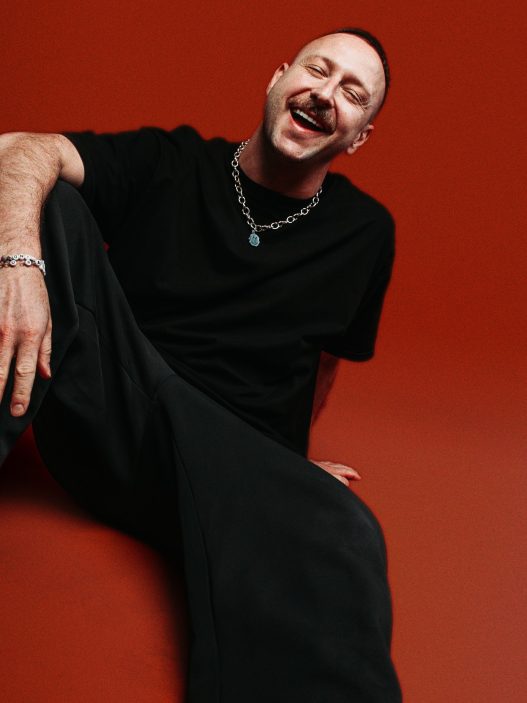








What started as a childhood idea to create a “Help the Pandas” fund eventually became the inspiration behind Viva La Panda, a project built around warm, feel-good electronic music that blends organic instrumentation with deep, bass-driven grooves. Designed to evoke the feeling of an endless summer escape, the project embraces creative freedom over genre labels, allowing each release to evolve naturally without being confined to a single sound.
In this conversation, Viva La Panda opens up about the influences that have shaped his sound, shares his perspective on the evolving electronic music landscape, discusses AI’s growing role in music production, and explains why staying true to your creative instincts is more important than chasing trends.

Many artists today move across and blend genres rather than fitting neatly into a single category. How would you personally define or label your sound, and what genres, subgenres, or underground scenes have most influenced and shaped your evolution as an artist?
Honestly, I’ve never understood how artists keep themselves to just one genre or vibe. I could never. I’m a human being, which means my creative spectrum is enormous. Viva La Panda is one of my projects where I can create my sunny, chill, vibey artistic expressions, but I also have other projects like Alfons and LOOKET that are tooootally different.
I see genres like emotions, you simply can’t have just one all the time. That’s why people who stick to, for example, Psytrance have always fascinated me. I kind of envy them, because I get anxious when I make a track that I absolutely love, but worry it might not fit the brand of one of my projects.
The Viva La Panda side of me draws a lot of inspiration from different contexts rather than other artists. Nothing gets me more excited to make music for this project than the period from August to November, because summer is still fresh in my memory. That said, I really love the records coming out of Big Top Amsterdam. One of their artists, Kronan, is someone I’d really like to give a shout-out to.
How did the environment you grew up in shape you as an artist, and in what ways does it still influence your creative identity today?
Hmmm… My parents are Persian, so Persian music was playing around the house constantly. Back then, I really didn’t like it, which is funny, because I absolutely love it today. However, I was born and raised in Sweden, and pretty much everything Max Martin was doing back then really moved me.
That sense of “pop” in almost everything is something I still really love. It’s such a Swedish way of making music, and it upsets me deeply that it’s slowly disappearing.
Do you prefer producing music in a studio setting, or are you more comfortable creating on the road/during touring?
I’ve started making music outside using a regular pair of headphones. It puts me in a completely different kind of mood creatively. Then I take those ideas back to the studio and finish them there!
Have you performed at any major music festivals or large-scale venues? If so, which one would you consider the most significant milestone in your career so far?
I’ve actually been touring across Europe for the past 12 years! I’d say some of the coolest experiences have been playing in small villages in the Austrian Alps. St. Empire is definitely one that stands out.
Do you feel more connected to the energy of major festival stages or the raw intimacy of underground warehouse parties and DIY spaces, or do you find inspiration equally in both worlds?
Both! Again, it really depends on how I’m feeling. Festivals have more of a happy, social vibe where I get to connect and hang out with people, while warehouse parties tend to be much more focused on the music itself.
What role does rebellion or counterculture play in your music? Whether through challenging commercial norms, experimenting with sound, questioning societal expectations, or simply creating from a place of pure expression, how do these ideas shape your artistic identity?
I think streaming killed the rebellion. These days, everything is categorised into playlists, and I see so many labels and artists trying to figure out which playlist they fit into. We have more genres today because making music is so much more accessible, but I think songs from 2010 and earlier had much stronger identities which I believe were more creative.
How would you evaluate the current state of the global EDM scene in terms of its overall health and creative direction, and how would you position it within a broader spectrum ranging from emerging challenges to strong creative growth?
I think it’s a bit stuck at the moment. Again, playlists have made us all into predictable products. We don’t need another Afro house DJ or another techno DJ making cover songs.
To really break the norms and push the culture forward, you need a big audience. Right now, the only artists I see doing that are Fred again.., Swedish House Mafia, Skrillex, and a few others.
Do you see AI as a threat to musicians, a helpful collaborator, or something else? How do you plan to keep your music relevant as the industry changes rapidly because of these tools? By embracing AI, avoiding it, or taking a different approach?
AI won’t take our jobs, people who understand AI will. I don’t know if that’s any comfort, but I think it’s the truth. That said, AI seems to be getting better by the minute. Even so, I still think it’s missing the thing that makes us human. It can mimic emotion, but because it has never actually experienced those emotions, there’s still something missing, for now, at least.
I also think AI has fundamentally changed the stock music industry. If anything, it’ll push artists to be more authentic, and I’m really interested to see how that plays out. What I’m still unsure about is who will be affected the most. Will it be mixing engineers, mastering engineers, producers, or everyone involved in the creative process?
I also think AI will push more creators toward short-form platforms to prove their authenticity. The sad thing is that, by far, the best musicians I’ve ever met are often the most awkward people, and TikTok isn’t really their natural environment.
What’s one piece of advice you would offer to an aspiring DJ or producer looking to break into the music scene today?
Honestly? Listen to no one, because no one really knows the answer right now. At the end of the day, I still believe the best songs win.
Looking ahead, what excites you most about the next phase of your artistic journey, both creatively and personally?
I would love to try to blend in different cultures in my music! I think that’s a brilliant way to bring the world together! I hate everything that has to do with “cultural appropriation”. Lets mix everything with everything. That naturally brings people together that otherwise wouldn’t have met.
Listen to Viva La Panda’s exclusive mix HERE:
Follow Viva La Panda