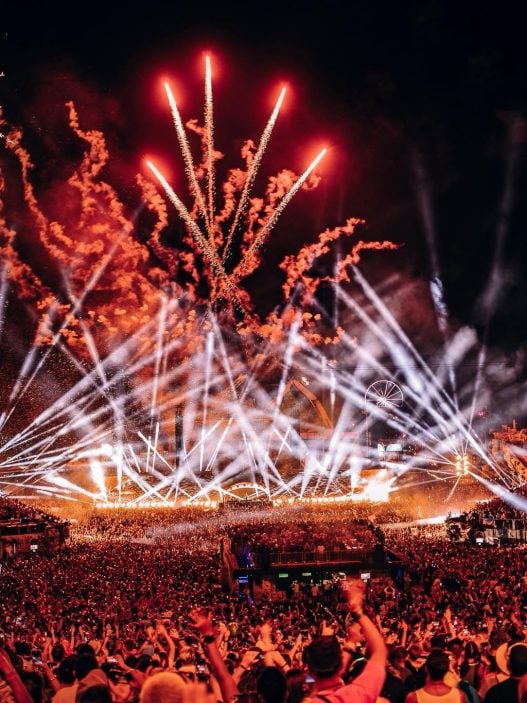






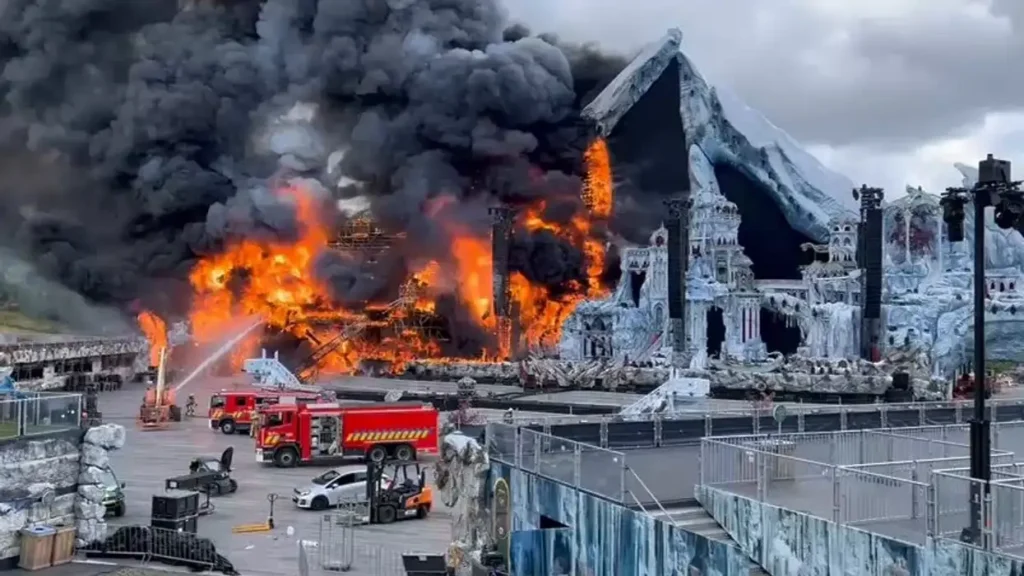
The timing couldn’t be more pointed. As Tomorrowland prepares to reopen its gates for the 2026 edition this week, a new report has finally offered an explanation for the fire that tore through the festival’s Mainstage almost exactly a year ago. According to Dutch outlet, sources close to the ongoing investigation now point to a subcontractor accidentally spilling ethanol while testing fire bowls on the stage, a mundane, human error rather than any dramatic sabotage or structural failure. For a community that spent the better part of a year without a clear answer, the update lands less as breaking news and more as closure.
The blaze broke out on July 16, 2025, just 48 hours before the festival’s gates were due to open, ultimately destroying the towering “Orbyz” stage that had taken two years to design and build. No injuries were reported, and organisers managed the rare feat of rebuilding an entirely new Mainstage structure in time for the festival to proceed as scheduled. In the months since, Tomorrowland commissioned an independent risk analysis through the University of Antwerp, which concluded that even if the fire had broken out mid-festival, crowds would have been able to reach safety within established evacuation standards. Spokesperson Debby Wilmsen reinforced that message directly, acknowledging that “the fire will always remain a part of Tomorrowland’s history,” while maintaining that no event can eliminate every risk entirely, only prepare as thoroughly as possible for the ones it can anticipate.
With Tomorrowland set to welcome fans back to Boom, Belgium across two weekends starting July 16, the very same date the fire broke out last year, the newly surfaced cause feels less like a footnote and more like the final piece of a story the festival has spent twelve months trying to move past. This year’s edition arrives under a new theme organisers are calling one of the most ambitious in the festival’s history, with a lineup including Calvin Harris, Martin Garrix, Hardwell, ILLENIUM, and David Guetta, a fitting way to answer last year’s disaster with scale rather than caution.