







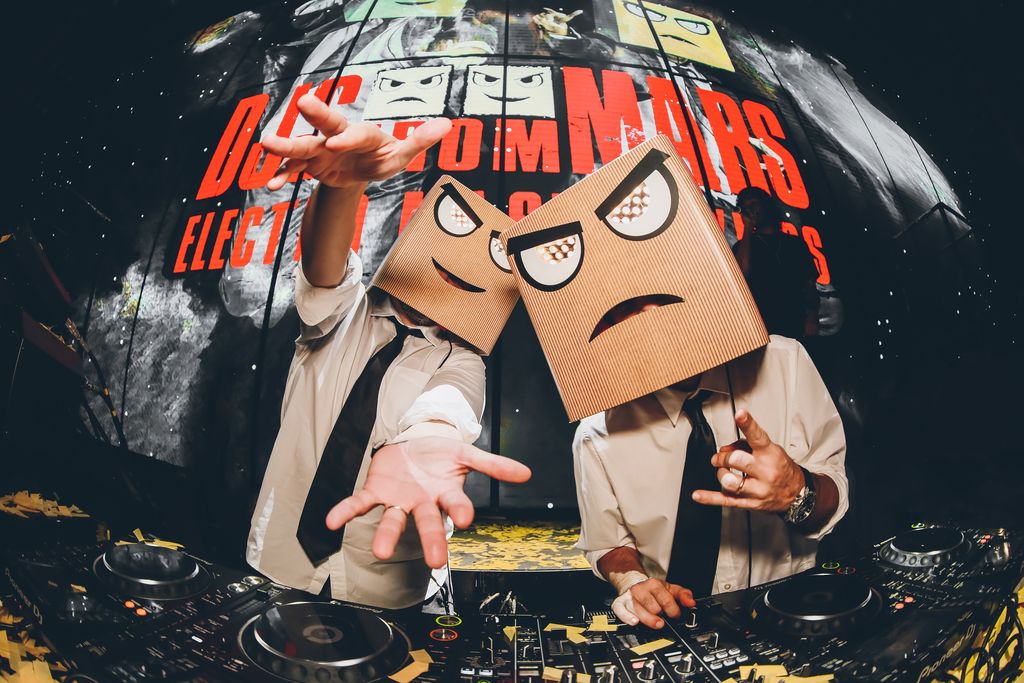
For over a decade, DJs From Mars have made a career out of refusing to pick a lane. The Turin-born duo built their name on genre-blending mash-ups and remixes, filtering everything from hip hop and rock to reggae and classical through a signature sound they’ve dubbed “Alien Electro”, instantly recognisable electro beats and basslines layered under influences as wide-ranging as Daft Punk, Bob Marley, and Pink Floyd.
That eclecticism was forged in Turin’s club scene of the late ’90s and 2000s, where a single night out might mean hopping between a hip hop event, a punk show, and a techno set, an environment the duo credits with shaping how they hear and make music to this day.
Djs From Mars have since taken that sound to some of electronic music’s biggest stages, including Tomorrowland’s Main Stage and Ushuaia Ibiza alongside David Guetta. Their latest release, a remix of Bebe Rexha and David Guetta’s ‘Sad Girl’ dropped July 1st and is currently the centerpiece of a busy summer touring schedule spanning Europe, America, and Asia, with more updates at www.djsfrommars.com. 
We caught up with the duo to talk sound, scenes, AI, and what’s next.
Many artists today move across and blend genres rather than fitting neatly into a single category. How would you personally define or label your sound, and what genres, subgenres, or underground scenes have most influenced and shaped your evolution as an artist?
We love every style and genre of music – and we try to include different styles in our mash-ups and remixes, but everything is always remixed in our signature electro style. So we love to call it Alien Electro! It’s really based on samples and influences from hip hop, rock, pop, reggae, even classical music, but then we always add our own electro beats and basslines to make our style recognizable. Our influences are really coming from different universes: Daft Punk, Beastie Boys, Bob Marley, Metallica, Linkin Park, Pink Floyd, we don’t have any limit and we don’t like a specific style, we think every style has a lot to give so we listen to everything!
How did the environment you grew up in shape you as an artist, and in what ways does it still influence your creative identity today?
We grew up in the 90’s-2000’s in Turin (Italy). It was a really creative and vibrant time in town: several small clubs by the river were playing different styles of music and literally everyone was spending their nights there, hanging around and hopping from a hip hop event to a live punk concert to a techno dj set. Contamination was the keyword – we grew up with a wide vision of music cause we literally grew up in this super creative environment. We really think that our hometown Turin helped us and shaped the way we see music and life in general, we would not be the same if we grew up in other cities, and we’re super thankful for that 🙂
Can you share a brief, compelling narrative or inspiration behind this new release?
Yes when we heard the song from David we immediately loved the vocal! also lyrics are really emotional. But the main version is really pop and radio oriented so we wanted to have a mix that we could play in our sets – and boom we tried working on it – David loved it, Bebe love it, and here we are!
Do you prefer producing music in a studio setting, or are you more comfortable creating on the road/during touring?
It really doesn’t matter anymore – our studio is a laptop so if we have an idea on a flight we’re definitely able to work on it like we were in studio. Sometimes ideas just come up unexpected so it’s great to be able to work on them immediately instead of waiting to be back in studio and maybe lose the creative moment….Of course we’re talking about the creative part: when we need to finalize a track, studio is necessary because we have our perfect audio set up where we can notice small frequency details that we’d not be able to fix on the road…
Have you performed at any major music festivals or large-scale venues? If so, which one would you consider the most significant milestone in your career so far?
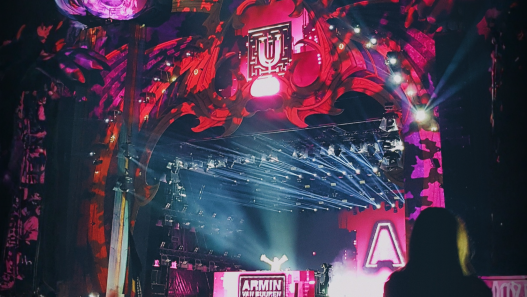
Probably Tomorrowland Main Stage and Ushuaia with David Guetta. Those 2 venues are so iconic, when we meet someone for the first time, one of the first questions will be for sure “how did u feel to play Tomorrowland?” or “what’s the feeling of playing Ushuaia?” These venues are not only simple venues, for djs and electronic culture they’re like, super iconic, and it’s always very emotional to play there 🙂
Do you feel more connected to the energy of major festival stages or the raw intimacy of underground warehouse parties and DIY spaces, or do you find inspiration equally in both worlds?
They’re both good! Of course big festivals are great cause you’re able to play your music in front of a huge crowd – but also you’re missing a bit of energy cause people are a bit far away from the stage, and you cannot really see and feel what’s happening….Some nights in small clubs are just perfect: crowd at 10 centimeters from the dj booth, you can actually see people dancing and sweating to the beat, and that’s what makes a dj happy 🙂
What role does rebellion or counterculture play in your music? Whether through challenging commercial norms, experimenting with sound, questioning societal expectations, or simply creating from a place of pure expression, how do these ideas shape your artistic identity?
We grew up listening to Public Enemy, Rage Against The Machine, The Clash, so we were always on the “rebel” side of music – we love music with a message. What we are trying to do is destroying boundaries, mixing styles and genres is also a political act: it reflects our ideas of the world, where we should all be united and never divided. Music has this great way to deliver the message: when people from every age, ethnicity, sex, religion, meet together for a concert, it’s really making the magic happen – That’s what the world should be like: a concert full of every kind of people enjoying the moment and living in peace with each others
How would you evaluate the current state of the global EDM scene in terms of its overall health and creative direction, and how would you position it within a broader spectrum ranging from emerging challenges to strong creative growth?
EDM is just a name, it always existed and it will exist forever: it’s basically Electronic Music. We tend to refer to EDM to those 2010-2015 years, but electronic dance music was already there in the 70’s. We think that it’s always evolving, new styles are coming up and old styles are coming back, but people will produce electronic music in the next centuries, and other people will dance to it
Do you see AI as a threat to musicians, a helpful collaborator, or something else? How do you plan to keep your music relevant as the industry changes rapidly because of these tools? By embracing AI, avoiding it, or taking a different approach?
Not at all – it’s a revolution of course, but electronic music has always been hungry for new technologies: it happened when hip hop djs started playing 2 copies of the same record to create breakbeats. It happened when drum machines like the Roland 808 came up in the market. Again, samplers like the Akai MPC shaped the music scene, and even before, distortion effects changed the way guitar players were creating music. AI is just a new way to experiment and create new sounds, and we think it could be really helpful if used like a tool. Of course, there’s people out there creating full songs in 2 minutes with a prompt, but that’s not the way – and this way of using AI will disappear really soon, listeners can recognize scams 😉
What’s one piece of advice you would offer to an aspiring DJ or producer looking to break into the music scene today?
Being original and unique is the only way to make it today – there are so many djs and producers out there, and they’re all trying to sound and look like their favorite act. But this way, they’ll be (in the best case) only a copy of something good. Being different is the only way to be recognized and to make it in a jungle of millions of good djs and producers
What is the official title and release date of your latest or upcoming single, EP, or album?
The remix of Bebe Rexha and David Guetta ‘Sad Girls’ has been (1st of July). We’re currently focused on promoting this huge release – and also we’ll be touring a lot in this summer months – then we’ll be back with new music but now we can’t announce it yet 😉
Looking ahead, what excites you most about the next phase of your artistic journey, both creatively and personally?
After 15 years focused on mash-ups and bootlegs – we’re really happy to move to the next step and try to release more original tracks. We’ll keep the mash-up vibe cause it’s in our DNA – so we’ll still be mixing different styles and influences, but also adding our own ideas instead of manipulating other tracks 🙂 that’s the next chapter for us!
Are there any upcoming festivals, tours, collaborations, headline shows, or major projects listeners should keep an eye out for over the coming months?
yeah summer tour has already started and we’ll be performing really everywhere, from Europe to America to Asia, so keep an eye on www.djsfrommars.com for the updates 🙂 See you around!
Listen to the exclusive mix on PLAYY.
Listen to Bebe Rexha and David Guetta ‘Sad Girls’ (Djs From Mars remix)
Follow Djs From Mars
Instagram – Spotify – YouTube – Facebook