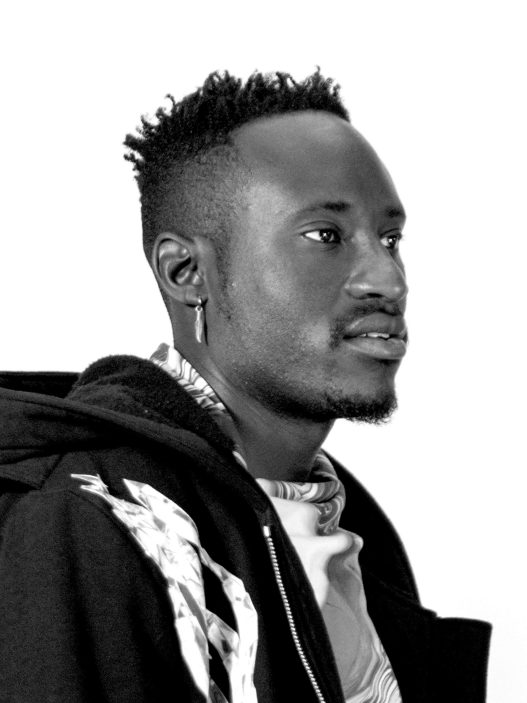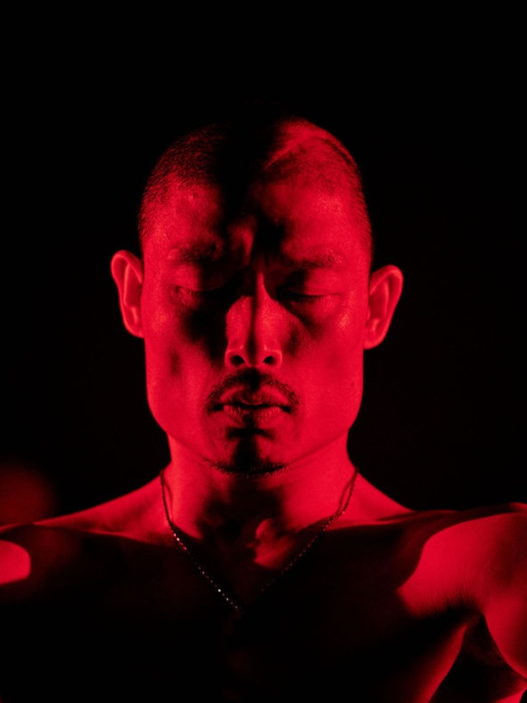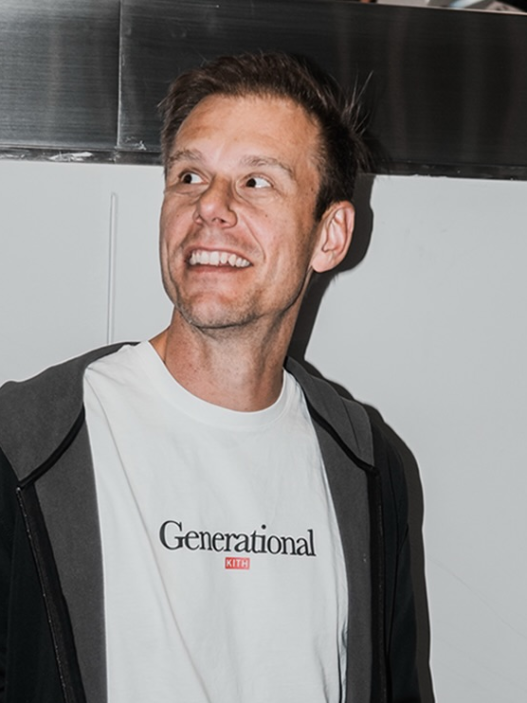









Austrian DJ and producer Van Snyder has built a global presence through a sound that refuses to sit comfortably inside a single genre. Blending Future Rave, Bigroom Techno and driving peak-time House with the melodic influence of Trance and the darker textures of modern club culture, his productions are designed to bridge the gap between festival-scale energy and underground intensity.
With releases and collaborations connected to labels including Revealed Recordings, Black Hole Recordings, Blanco y Negro Music, Warner Music Denmark and Interplay Records, Van Snyder has established a reputation for high-impact production and genre-fluid electronic music. His work has also received support from artists including David Guetta, Tiësto, Robin Schulz and AFROJACK, alongside official remix work for artists such as Flo Rida, Lil Wayne, Akon and Bonnie Tyler.
Now, with his sound entering a new phase, Van Snyder is turning his attention toward an even more powerful combination of Future Rave, Mainstage energy and driving House grooves. We caught up with him to discuss his creative evolution, his studio-driven approach, the changing EDM landscape, AI, and his plans to finally take this new chapter from the studio to the stage.
Many artists today move across and blend genres rather than fitting neatly into a single category. How would you personally define or label your sound, and what genres, subgenres, or underground scenes have most influenced and shaped your evolution as an artist?
I’ve never believed in boxing myself into a single genre, because to me, electronic music is all about energy and evolution. If I had to label my current sound, I’d define it as a high-octane blend of Future Rave, Bigroom Techno, and driving, peak-time House.
I love taking the emotional depth and massive leads of classic Trance and fusing them with the raw, uncompromising basslines of the modern underground techno scene. My evolution as an artist has been heavily shaped by two distinct worlds. On one hand, I’m deeply influenced by the early 2010s mainstream EDM era – that undeniable Mainstage energy where melody and anthemic hooks ruled the crowd. On the other hand, the underground Rave revival and the darker, industrial textures of modern club culture have completely reshaped how I approach sound design.
Melding these influences allows me to create tracks like “You Get What You Give” or “Lose Control” together with Serena Bleu and Alexander Popov – music that feels massive and perfectly produced for the festival mainstages. 
How did the environment you grew up in shape you as an artist, and in what ways does it still influence your creative identity today?
Growing up in Austria gave me a very unique perspective on music. On one side, you are surrounded by rich cultural history and breathtaking, serene landscapes, which naturally teaches you to appreciate melody, depth, and structure. On the other side, Europe is the absolute heartland of electronic music culture.
Being exposed to the legendary European festival scene and club culture from an early age completely sparked my passion for electronic beats. That contrast still heavily influences my creative identity today. The peace and focus I find in my hometown environment allow me to look inward and lock into the creative process without distractions.
Yet, every time I step into the studio, I channel that raw, high-energy contrast of the European nightlife I grew up with. It taught me that music needs both a solid, melodic foundation and an undeniable, driving energy to connect with people globally.
Can you share a brief, compelling narrative or inspiration behind your new release?
The inspiration behind “Brazili” comes from a shared desire to capture that deep, hypnotic, and driving Tech House energy that keeps underground dancefloors locked in for hours.
Following the incredible reception of our previous collaboration, “Detki Tancuyut,” Alexander Popov, Gorilla Zippo, and I knew we wanted to push our sound in a sleeker, sexier, and more club–focused direction. We wanted to capture that late-night peak-time groove – much like the raw minimalist, but heavily rolling vibe you hear from artists like Max Styler.
Musically, “Brazili” is built around a relentless, driving bassline, crisp percussion, and an explosive, hypnotic rhythm that completely commands the room. Working together was effortless; we focused on trimming away the fat to let the pure, infectious groove take over.
It’s designed specifically for those dark, sweaty club moments where the bass hits deep and the crowd completely loses track of time.
Do you prefer producing music in a studio setting, or are you more comfortable creating on the road or during touring?
Right now, I am 100% a studio-driven producer. I spend all my time locked in the studio because that is where I feel most comfortable and where my creativity truly thrives.
For me, music production requires a high level of focus, the perfect acoustic environment, and the right workflow to dive deep into sound design and mixing. I love the process of sitting down, experimenting for hours, and obsessing over every single detail of a track until it sounds flawless.
Have you performed at any major music festivals or large-scale venues? If so, which one would you consider the most significant milestone in your career so far?
While I am currently focusing all my energy on building my catalog, perfecting my sound, and locking in these massive releases, playing at a major music festival or large-scale venues is the next logical step.
I am already preparing for the road, and I know that when the touring schedule picks up, I’ll have to adapt to producing on laptops in hotel rooms. But for now, the studio is my sanctuary where the magic happens.
Do you feel more connected to the energy of major festival stages or the raw intimacy of underground warehouse parties and DIY spaces, or do you find inspiration equally in both worlds?
As a producer who is currently focusing 100% on the studio and building my sound, I actually find massive inspiration in both worlds, because they trigger completely different creative mindsets.
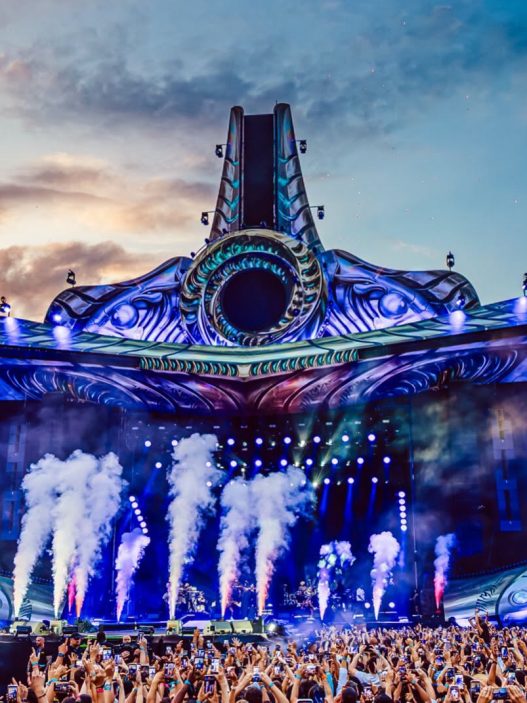
When I look at major festival stages, I am inspired by the sheer scale, the unity, and the anthemic energy. I love the challenge of engineering a track in the studio that is powerful enough to make tens of thousands of people move together in perfect sync.
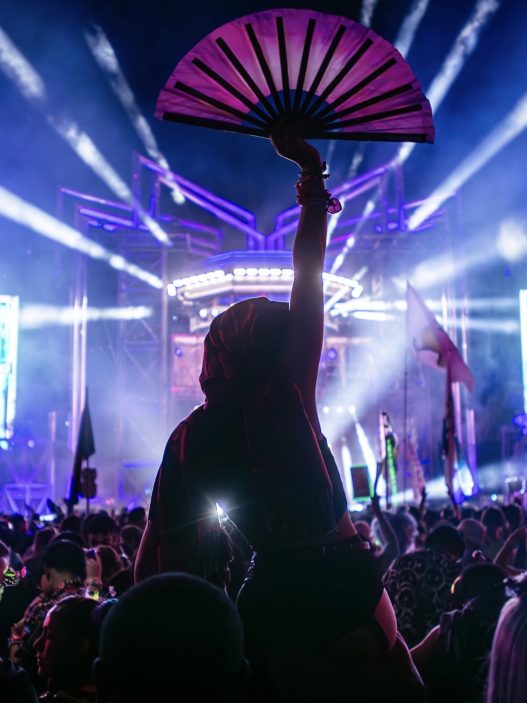
On the other hand, my heart is deeply rooted in the raw intimacy of underground spaces and rave parties. That’s where the music is tested in its purest form.
What role does rebellion or counterculture play in your music?
Rebellion plays a huge role in my artistic identity because it represents total creative freedom. In the studio, I completely shut out societal expectations or what “the industry” thinks a successful track should sound like.
If you look at the roots of dance music, it was born in underground spaces as an escape from the norm – a safe haven for pure expression. I try to honor that history.
My way of challenging commercial norms is through sonic experimentation. Blending heavy, underground textures with minimalist tech grooves might not fit into a neat, radio-friendly box, but it is exactly where my passion lies.
By refusing to limit myself to one specific commercial standard, I keep my sound raw and exciting. It’s all about staying true to the energy of the dancefloor and creating an authentic sonic experience, rather than manufacturing a product just to fit in.
How would you evaluate the current state of the global EDM scene in terms of its overall health and creative direction?
Evaluating the current state of electronic music requires looking at both sides of the coin.
On one hand, the scene faces the challenge of commercial pressure, where tracks are sometimes treated like fast-moving content rather than timeless art. The industry moves incredibly fast, and it’s easy for artists to get caught up in chasing viral trends.
On the other hand, the overall health of the scene is incredibly strong because the community is more global and connected than ever before. We are in a state of strong creative growth because boundaries between genres are completely melting away.
Producers are mixing underground textures with mainstream energy, and crowds are more open-minded than ever before. This spectrum of challenges and growth pushes me to stay sharp. It reminds me to use the modern tools of the industry to spread my music globally, while keeping my core creative process rooted in authentic, uncompromised club culture.
Do you see AI as a threat to musicians, a helpful collaborator, or something else?
I don’t view AI as a threat, but rather as an incredibly powerful assistant and a catalyst for workflow efficiency.
In the studio, AI tools can help speed up the technical and tedious parts of music production – like mixing, mastering, or organizing sample libraries. Embracing these tools for efficiency allows me to spend less time on technical troubleshooting and more time on actual creativity.
However, a tool is only as good as the person using it. To keep my music relevant as the industry changes, my approach is to blend technological advancements with irreplaceable human emotion.
AI can mimic structures, but it cannot recreate personal experiences or a feeling on a dancefloor. My strategy is to use AI to sharpen my workflow, but the soul, the core groove, and the artistic vision of my tracks will always remain 100% human.
What’s one piece of advice you would offer to an aspiring DJ or producer looking to break into the music scene today?
My biggest piece of advice is to focus on finding your own unique sonic identity rather than trying to copy whatever is currently viral or charting.
With the rise of bedroom production software and AI tools, anyone can make a standard, generic track today. The barrier to entry is lower than ever before, which means the only way to truly stand out is by being completely authentic.
Spend those endless hours locked in the studio, experiment with different genres, and learn your craft inside out. Don’t rush to release your very first beats. Wait until you have a sound that makes people stop and ask, “Who produced this?”
Consistency and patience in the studio are your greatest assets. If you build a flawless catalog of music and stay true to your vision, the industry, the labels, and the booking will eventually follow.
What is the official title of your latest or upcoming single, EP, or album?
Gorilla Zippo, Alexander Popov & Van Snyder – “Brazili”
Looking ahead, what excites you most about the next phase of your artistic journey, both creatively and personally?
Creatively, what excites me most is the evolution of my sound. I am shifting my focus toward a high-energy blend of Future Rave, Mainstage power, and driving House grooves.
Personally, the next phase is all about making the transition from the studio to the stage. I’ve spent so much time in isolation, perfecting the sonic details of my tracks, that the ultimate goal now is to finally share that energy live with a crowd.
I am preparing to launch my touring journey, step behind the decks, and watch people experience this new Future Rave and Mainstage energy in real-time. Moving from creating the music in the studio to seeing its direct impact live on the dancefloor is definitely the most thrilling chapter ahead.
Are there any upcoming festivals, tours, collaborations, headline shows, or major projects listeners should keep an eye out for over the coming months?
I’m currently locked in the studio working on a massive amount of unreleased music that perfectly represents this new sonic direction.
I am incredibly excited about several upcoming projects and collaborations with the amazing Serena Bleu, Alexander Popov, and many other talented artists. Seeing these visions come to life on top-tier labels is fueling my creativity like never before.
Listen to Gorilla Zippo, Alexander Popov & Van Snyder – “Brazili” on PLAYY. Music
Listen to the exclusive mix with Van Snyder HERE!
Follow Van Snyder:
YouTube – Spotify – X – Facebook – Instagram