

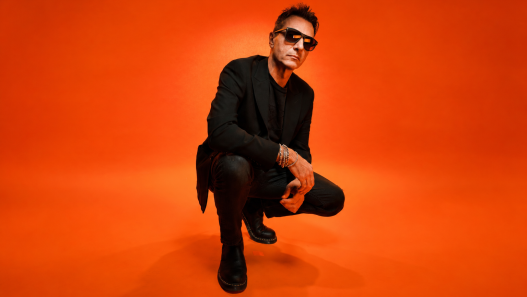







One of Burning Man’s original architects used the event’s 40th-anniversary weekend to publicly disown what it’s become. In an essay published in The San Francisco Standard, John Law who helped relocate the gathering to Nevada’s Black Rock Desert back in 1990, argued that the modern festival bears little resemblance to what he and the founding crew set out to build, describing it as having drifted entirely from its original countercultural spirit.
Law’s critique centers on class. He paints today’s Burning Man as a curated luxury experience for the wealthy, pointing to plug-and-play camps staffed with private chefs, hired stylists dressing attendees for the playa, and charter flights ferrying people into the desert. He also pushes back on the event’s own mythology, claiming the widely cited “10 Principles” weren’t part of some founding philosophy but were written retroactively in 2004, long after the event already existed without one.
According to Law, the turning point came in the late ’90s, when WIRED magazine put Burning Man on its cover and Silicon Valley began adopting it as a cultural ritual. He calls out tech figures by name; Elon Musk, Sergey Brin, Larry Page, Mark Zuckerberg, and Jeff Bezos among them and notes that Google went as far as decorating its offices with playa photography and reportedly factoring Burning Man attendance into a CEO search. In his telling, an event built on decentralized, self-organising principles calcified into something hierarchical and status-driven, functioning less as an experiment in the radical community and more as a sanctioned outlet for tech-industry excess. 
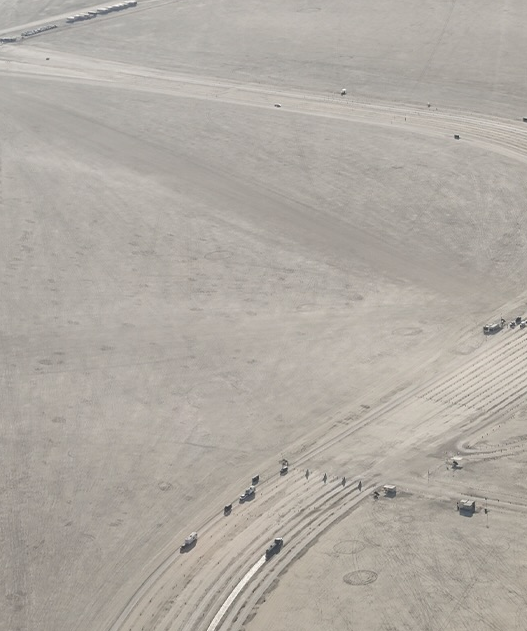
Law hasn’t attended since 1996, and his objections aren’t purely philosophical. He was previously involved in legal efforts to push Burning Man’s trademarks into the public domain, arguing the event shouldn’t be ownable at all. He points to the organisation’s real estate acquisitions around the Black Rock Desert and its Gerlach base, along with the professional PR machine it built starting in the late ’90s, as evidence of just how far the event has moved from its roots. Burning Man’s 2026 edition is currently underway and runs through September 7 in the Black Rock Desert.
Image Source: Teri Lou Danztler