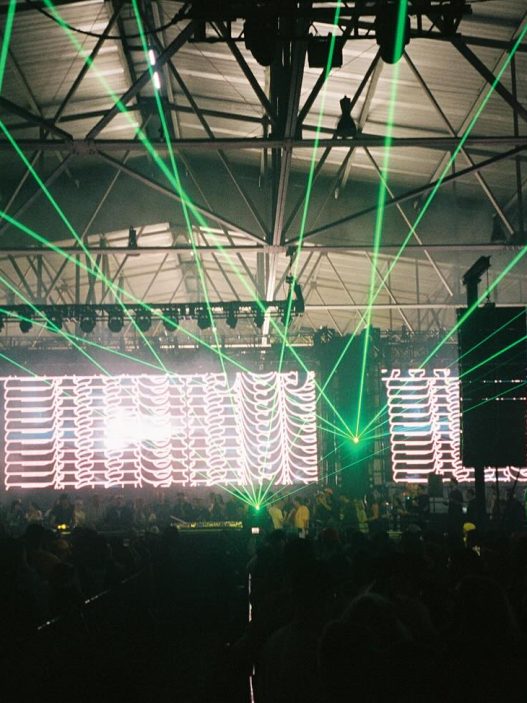












Photo Credit: Leif Bergerson
Electronic music has never been bigger. What began in underground clubs, warehouses, record shops and pirate radio stations has developed into a global industry spanning festivals, streaming platforms, nightclubs, record labels, publishing, technology, fashion and advertising. The world’s biggest electronic artists now headline stadiums and festivals, while dance music has become a central part of the global entertainment economy. Yet behind the spectacular growth is a contradiction that is becoming increasingly difficult to ignore: electronic music is generating enormous amounts of money, but many of the DJs, producers and independent artists who created the culture continue to struggle to make a sustainable living.
The scale of the industry is difficult to ignore. The International Music Summit’s latest Electronic Music Business Report valued the global electronic music industry at $15.1 billion in 2025, representing 7% year-on-year growth. That figure encompasses far more than recorded music, including live events, technology, publishing and other parts of the electronic music ecosystem. It demonstrates just how far dance music has travelled from its underground origins. What was once dismissed as a niche or countercultural movement is now a substantial global business with millions of people working within it. 
But a $15.1 billion industry does not mean $15.1 billion going into the pockets of the artists making the music. The figure represents the entire ecosystem surrounding electronic music, from ticketing companies and festivals to streaming services, equipment manufacturers, promoters and technology businesses. The artist sits at the centre of that ecosystem, but that does not necessarily mean they receive the largest share of its economic value.
Streaming is perhaps the clearest example of this contradiction. Electronic music has benefited enormously from the global transition towards streaming. An independent producer can now upload a track from a bedroom studio and potentially reach listeners anywhere in the world without a traditional record deal. The barriers to distribution have almost disappeared, allowing niche genres and underground scenes to find international audiences in ways that would have been almost impossible two decades ago.
At the same time, streaming has created an extraordinary competition for attention. The global recorded-music industry generated $31.7 billion in revenue during 2025, with streaming accounting for almost 70% of the total. Paid streaming subscriptions reached 837 million worldwide, demonstrating the enormous scale of the modern music economy. Yet the growth of the overall market does not automatically translate into meaningful income for an individual producer.
For electronic artists, this problem can be particularly pronounced because production is often only one part of a much larger career. A producer may spend months creating a track before paying for mastering, artwork, promotion and distribution. They may then need to invest further in social media, press, music videos, DJ equipment and travel to support its release. Even a successful track may need significant streaming numbers before its royalties begin to resemble a meaningful income.
The modern electronic music landscape demands that artists wear many hats: performer, producer, promoter, and businessperson, as streaming revenue alone rarely suffices. While top-tier acts command massive festival fees and sponsorship deals, the vast majority of working DJs and producers struggle to find financial security. The erosion of the club circuit further complicates this disparity, the very infrastructure essential for developing talent, as rising operational costs and shifting nightlife trends threaten the spaces where new artists build their audiences and skills.
The UK’s electronic music sector, generating £2.47 billion in 2025, highlights a critical decline in mid-sized venues essential for artist development. While festivals offer scale, they cannot replace the foundational role of small clubs where genres evolve, and artists build loyal followings. This infrastructure loss coincides with an irony in the digital age. While accessible music technology has democratized production, it has simultaneously oversaturated the market, forcing millions of artists to compete for the same finite listener attention.
Electronic artists face immense pressure to balance their creative work with the demands of marketing, content creation, and community building, as simply making music is no longer enough to sustain a career. This struggle for visibility is further complicated by the emergence of generative AI, which, while offering potential new production tools, threatens to saturate streaming platforms with low-cost content, making it increasingly difficult for human artists to stand out and compete in an already crowded market.
While the electronic music industry is experiencing massive global growth, that commercial success is unevenly distributed, leaving many artists struggling to make a living. Consequently, artists are increasingly diversifying their income through direct-to-fan sales, merchandise, and live performances, rather than relying solely on streaming, marking a crucial shift toward more sustainable, community-focused career models.